What to expect from the Year 6 Position and Direction resources
Want a glimpse of how you can use Third Space Learning resources in your classroom?
PREMIUM
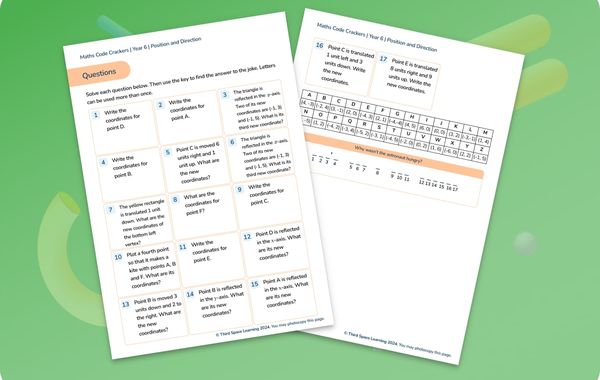
Maths Code Crackers Pack | Position And Direction | Year 6
Year 6
PREMIUM
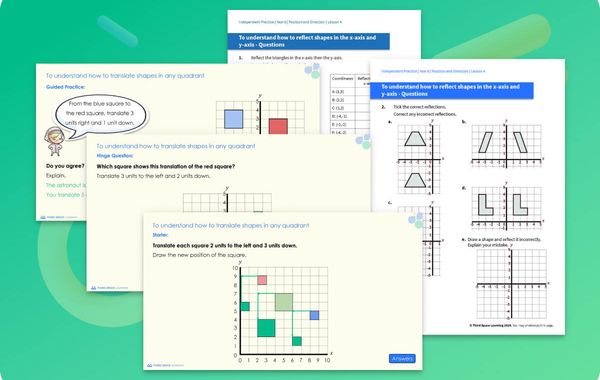
Ready-To-Go Lessons V2 | Position And Direction | Year 6
Year 6
PREMIUM
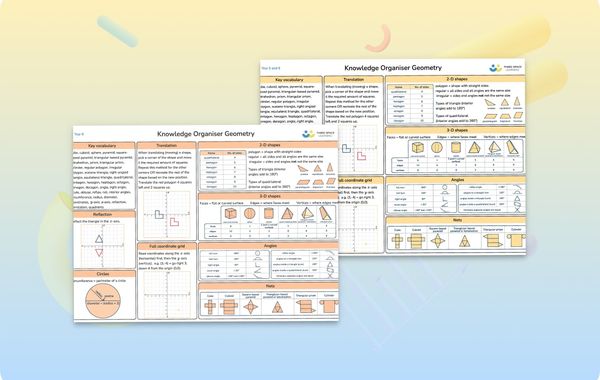
Knowledge Organiser | Geometry | Year 6
Year 6
PREMIUM
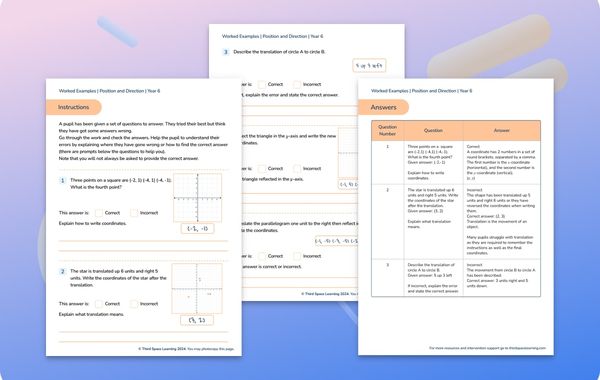
Worked Examples | Position And Direction | Year 6
Year 6
PREMIUM
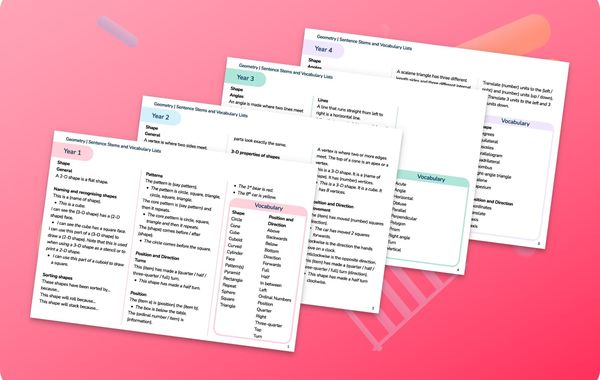
Sentence Stems And Vocabulary Lists | Geometry
Year 1
Year 2
Year 3
Year 4
Year 5
Year 6
PREMIUM
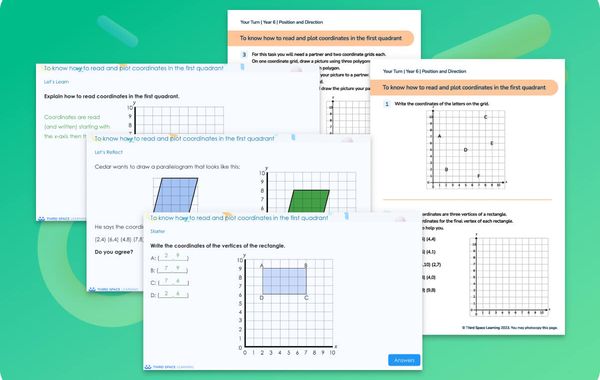
Ready-To-Go Lessons V3 | Position And Direction | Year 6
Year 6
FREE
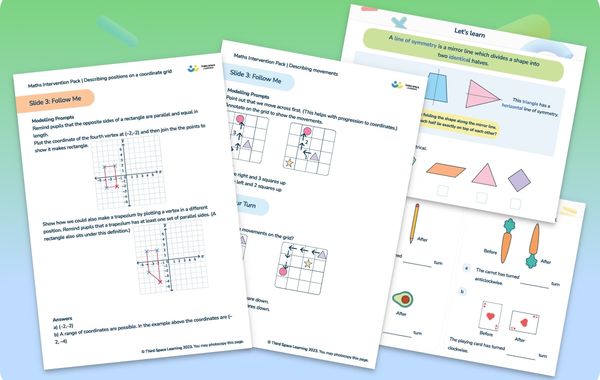
Maths Intervention Pack | Geometry
Year 2
Year 3
Year 4
Year 5
Year 6
PREMIUM
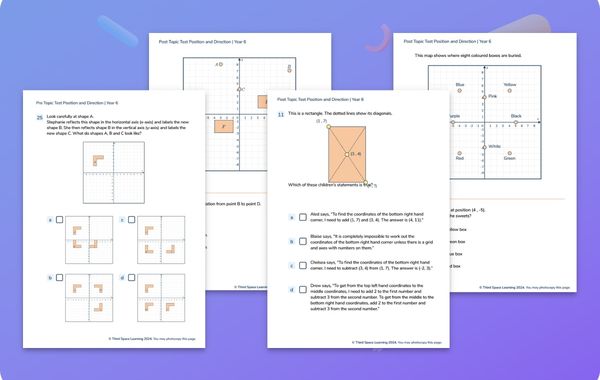
Diagnostic Assessment | Position and Direction | Year 6
Year 6
Teaching tips for Position and Direction Year 6
Start with Concrete Examples: Use physical objects like arrows or toy cars to demonstrate direction and position.
Incorporate Technology: Use interactive whiteboards for dynamic demonstrations of movement and direction.
Real-Life Contexts: Relate lessons to real-world scenarios, like map reading or navigation.
Visual Aids: Employ grid paper and diagrams to help visualise concepts.
Peer Teaching: Encourage students to explain concepts to each other in pairs.
Adaptive Teaching: Provide varied tasks, such as simple direction games for some and complex map challenges for others.
Regular Feedback: Offer immediate, specific feedback to guide understanding.
Incorporate Movement: Use classroom space for students to physically move and understand directions.
Assessment: Use quick quizzes to gauge understanding and adapt future lessons accordingly.